There is something deeply satisfying about woodworking. The smell of fresh sawdust, the hum of the machine, and the feeling of creating something beautiful with your own hands—it is a feeling unmatched by any other hobby.
But let’s be honest for a second. That table saw spinning at 4,000 RPM? It doesn’t care if it’s cutting through Oak, Pine, or your finger. It has no feelings.
As beginners, we often get excited about the project—the chair, the shelf, the box—and we forget about the process. I remember my first close call. I was rushing to finish a cut, didn’t use a push stick, and the wood kicked back, flying past my ear like a bullet. That day, I learned that woodworking is 10% skill and 90% safety.
If you are looking to start your woodworking journey, or even if you have been at it for a while, these 5 Essential Safety Rules are not just suggestions. They are the laws of the workshop.
Let’s dive in.
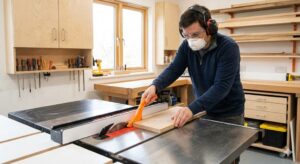
1. PPE is Non-Negotiable (Protect Your Assets)
You might think you look “cool” without safety gear, or maybe you think, “I’m just making one quick cut, I don’t need glasses.”
That “one quick cut” is usually when accidents happen. Personal Protective Equipment (PPE) is your first line of defense against the unpredictable nature of wood.
Eyes: Your Most Valuable Tool
Wood chips, dust, and even broken metal from blades can fly at incredible speeds. Regular prescription glasses or sunglasses are not safety glasses.
The Rule: Always wear ANSI Z87.1 rated safety glasses.
Human Tip: Buy a comfortable pair. If they hurt your ears or fog up, you’ll take them off. Spend a few extra dollars for comfort so you actually wear them.
Ears: Save Your Hearing for Later
Power tools are loud. A table saw or router can easily exceed 100 decibels. Hearing loss doesn’t happen overnight; it happens slowly, cut by cut. By the time you notice you can’t hear conversations clearly, it’s too late.
The Rule: Use ear muffs or high-quality earplugs whenever a machine is running.
Lungs: The Silent Killer
Sawdust—especially fine dust from sanding—is terrible for your lungs. Some woods are even toxic or allergenic.
The Rule: Wear a N95 mask or a respirator when sanding or cutting.
Pro Tip: If you can’t afford a fancy dust collection system yet, simply opening a window and using a fan to blow dust away from you helps, but it doesn’t replace a mask.
2. Sharp Tools are Safer Than Dull Tools
This sounds contradictory to a beginner. “Wait, isn’t a sharper blade more dangerous?”
Actually, no. A dull blade is a woodworker’s worst enemy.
Why Dull Tools Cause Accidents
When a chisel, saw blade, or drill bit is dull, it doesn’t cut clean. It struggles. This forces you to push harder.
The Danger: When you push hard, you lose control. If the tool slips while you are putting all your weight behind it, your hand will slip right into the path of the blade or the wood.
The Fix: A sharp tool does the work for you. You should simply be guiding the tool, not fighting it.
Inspect Before You Start
Before you turn on your saw or grab your chisel, take 5 seconds to look at the edge.
Is there pitch (sticky resin) built up on the blade? Clean it.
Are there burn marks on your wood after a cut? Your blade is likely dull.
Does the motor sound like it’s bogging down? Change the blade.
Keeping tools sharp isn’t just about safety; it also makes your projects look much better with cleaner cuts and less sanding.
3. The “Red Zone” & Respecting the Machine
Every machine in your shop has a “Red Zone” or a danger zone. This is the area where your hands should never be while the machine is running.
The 3-Inch Rule
A good rule of thumb for beginners is the “3-Inch Rule.” Keep your fingers at least 3 inches away from any moving blade or bit.
If you need to cut a small piece of wood that puts your hands closer than 3 inches? Do not use your hands.
Use a Push Stick: A push stick is a simple wooden or plastic tool that acts as an extension of your hand. If the blade kicks back or slips, the push stick gets cut, not your thumb.
Disconnect Power When Changing Blades
This is a classic mistake. You want to change a router bit or a saw blade, and you think, “I’ll just be careful not to hit the switch.”
The Reality: Switches can be bumped. Cords can be tripped over.
The Rule: Unplug the tool. Physically remove the plug from the wall before your hands go near the cutter. It takes 5 seconds and guarantees 100% safety.
4. Manage Your Mental State (Halt, Fatigue, and Focus)
Woodworking requires 100% of your attention. You cannot be woodworking while texting, watching TV, or daydreaming.
The “HALT” Method
There is a concept used in aviation and dangerous jobs called HALT. Never work if you are:
Hungry
Angry
Lonely (Distracted/Depressed)
Tired
Fatigue is Real
Most accidents happen at the end of the day. You are trying to finish that one last cut before dinner. You are tired, your muscles are weak, and your reaction time is slow.
The Human Touch: Listen to your body. If you find yourself making simple mistakes or feeling frustrated, turn off the lights and leave the shop. The wood will still be there tomorrow. It’s better to finish the project a day late than to finish it in the emergency room.
Sobriety
This goes without saying, but never mix alcohol or drugs with woodworking. Even one beer can slow your reaction time enough to turn a near-miss into an accident. Save the celebration drink for after the cleanup is done.
5. Dress the Part (No Loose Ends)
Your workshop is not a fashion show. What you wear can actually drag you into a machine.
The Danger of Loose Clothing
Rotary tools like lathes, drills, and table saws love to grab things. A loose sleeve, a dangling hoodie string, or a tie can get caught in a split second. Once the machine grabs the fabric, it pulls your body in with it.
The Dress Code
Roll up your sleeves: Keep them above the elbows.
Remove Jewelry: No rings, no watches, no bracelets. A ring can get caught on a piece of wood or a machine edge, leading to a “degloving” injury (you don’t want to Google that).
Tie back long hair: If you have long hair, tie it back securely.
Footwear: Wear closed-toe shoes with good grip. You will be dropping heavy wood and sharp tools; sandals are a recipe for disaster.
Conclusion: Safety is a Habit, Not a Task
Safety isn’t something you do once; it’s something you do always.
It might feel annoying to put on safety glasses every single time. It might feel slow to look for a push stick when the cut is “just right there.” But experienced woodworkers know that speed comes from confidence, and confidence comes from knowing you are safe.
As you start your journey on woodworking.ajazinfo.in, remember that your most important tool in the shop isn’t your table saw or your drill—it’s your body. Protect it, respect the tools, and you will have a lifetime of building beautiful things.
Stay safe, and happy building!
Frequently Asked Questions (FAQs)
Q: Do I really need a mask for just a few cuts? A: Yes. Even a small amount of fine dust can irritate your lungs. Over time, this builds up. It is always better to be safe than sorry.
Q: What is the most dangerous tool for a beginner? A: Statistically, the table saw causes the most accidents, often due to “kickback.” However, a dull utility knife or chisel can be just as dangerous if they slip.
Q: Can I wear gloves while woodworking? A: Generally, NO. You should not wear gloves while using spinning power tools (like saws or drills) because the glove can get caught and pull your hand in. Gloves are okay for handling rough lumber, but take them off when the machine starts.